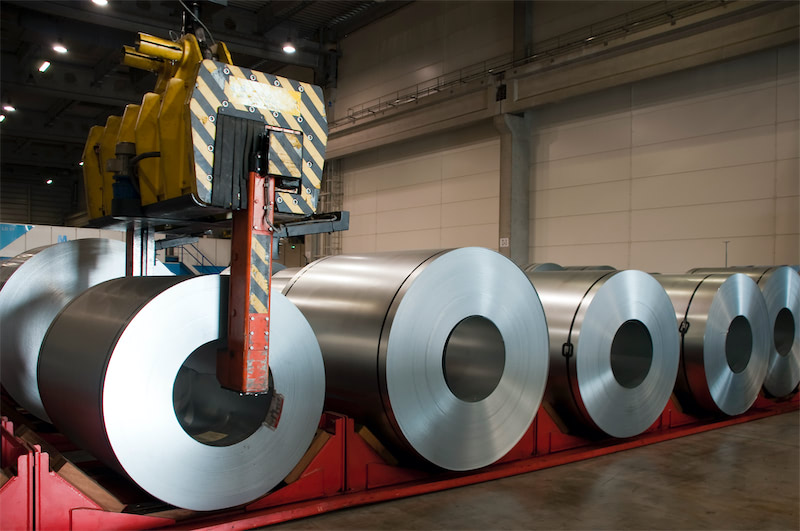
- In mid-May, the price spread between cold-rolled and hot-rolled products stopped falling and stabilized.
According to SMM data, as of May 30, the average SMM national price spread between cold-rolled and hot-rolled products was 443 yuan/mt. The average for this week decreased by 1.0% WoW, and the average for this month decreased by 27.5% MoM compared to last month.
However, recently, the price spread between cold-rolled and hot-rolled products, which had been falling rapidly since early April, finally showed signs of stopping its decline and stabilizing. Data indicates that the average price spread in late May was 455 yuan/mt, an increase of 1.6% compared to early May.
- Tariff war hits pause, golden window period supports slowdown in cold-rolled product price declines
On May 12, a joint statement was released following the Sino-US Geneva Economic and Trade Talks, announcing a significant reduction in bilateral tariff levels between China and the US: The US will (1) revise the ad valorem tariffs imposed on Chinese goods (including those from the Hong Kong Special Administrative Region and the Macao Special Administrative Region) as specified in Executive Order 14257 of April 2, 2025. Among these, a 24% tariff will be suspended for the initial 90 days, while the remaining 10% tariff on these goods will be retained as stipulated in the executive order; (2) Cancel the tariff hikes on these goods imposed under Executive Order 14259 of April 8, 2025, and Executive Order 14266 of April 9, 2025.
China will (1) correspondingly revise the ad valorem tariffs imposed on US goods as specified in Announcement No. 4 of 2025 by the Customs Tariff Commission. Among these, a 24% tariff will be suspended for the initial 90 days, while the remaining 10% tariff on these goods will be retained, and the tariff hikes on these goods imposed under Announcement No. 5 and No. 6 of 2025 by the Customs Tariff Commission will be canceled; (2) Take necessary measures to suspend or cancel non-tariff countermeasures against the US that have been in place since April 2, 2025.
With the tariff war hitting pause and a 90-day golden export window period opening, Wang Jianguo, Vice President of Midea Group and President of the Smart Home Business Group, stated in an interview that within 90 days, the tariff on most home appliances exported from China to the US will be 55% (25% + 20% + 10%). Compared to April 1 this year, only 10% of the tariff is newly added. It is estimated that the vast majority of home appliances produced in China will resume shipments.
According to the latest SMM survey, after the tariff negotiations were finalized, multiple home appliance companies have resumed order flows to the US. Some companies have reported tight cabin or container availability, with shipping schedules somewhat constrained, but they remain relatively positive about the 90-day golden export period.
The reduction in export costs and improvement in order situations for the manufacturing sector, an important branch of demand for the cold-rolled industry, have largely provided support for cold-rolled product prices, ending the continuous decline in the price spread between cold-rolled and hot-rolled products.
- June: It is expected that the price spread between cold-rolled and hot-rolled coils will likely see a slight recovery.
Based on the profitability of steel mills according to SMM, due to the significant decline in cold-rolled coil prices in the early stage, the immediate profitability of cold-rolled coils has now fallen below the critical point, while the profitability of hot-rolled coils remains around 100 yuan/mt. In the short term, steel mills have relatively low enthusiasm for producing cold-rolled coils, resulting in low production levels. On the demand side, the reduction in tariffs, combined with stimulus policies such as trade-in policies and national subsidies for manufacturing products in China, are expected to support the resilience of manufacturing demand amidst increasing seasonal impacts. It is anticipated that the rate of decline in demand for both cold-rolled and hot-rolled coils will be slow in June.
Overall, the production pressure for cold-rolled coils in June is expected to be lower than that for HRC. Currently, the price spread between cold-rolled and hot-rolled coils has narrowed to a relatively low level compared to the same period in recent years. In some regions, the price spread has approached the cost line, making further downward adjustments difficult. It is expected that the price spread between cold-rolled and hot-rolled coils will see a slight recovery in June.
![Before the holiday, the black chain is unlikely to see a trend-driven market [SMM Steel Industry Chain Weekly Report].](https://imgqn.smm.cn/usercenter/zUFfM20251217171748.jpg)
![[SMM Chromium Daily Review] Inquiries and Transactions Weakened, Chromium Market Showed Mediocre Performance Before the Holiday](https://imgqn.smm.cn/usercenter/ENDOs20251217171718.jpg)